A Personal Paranormal Experience from the Field
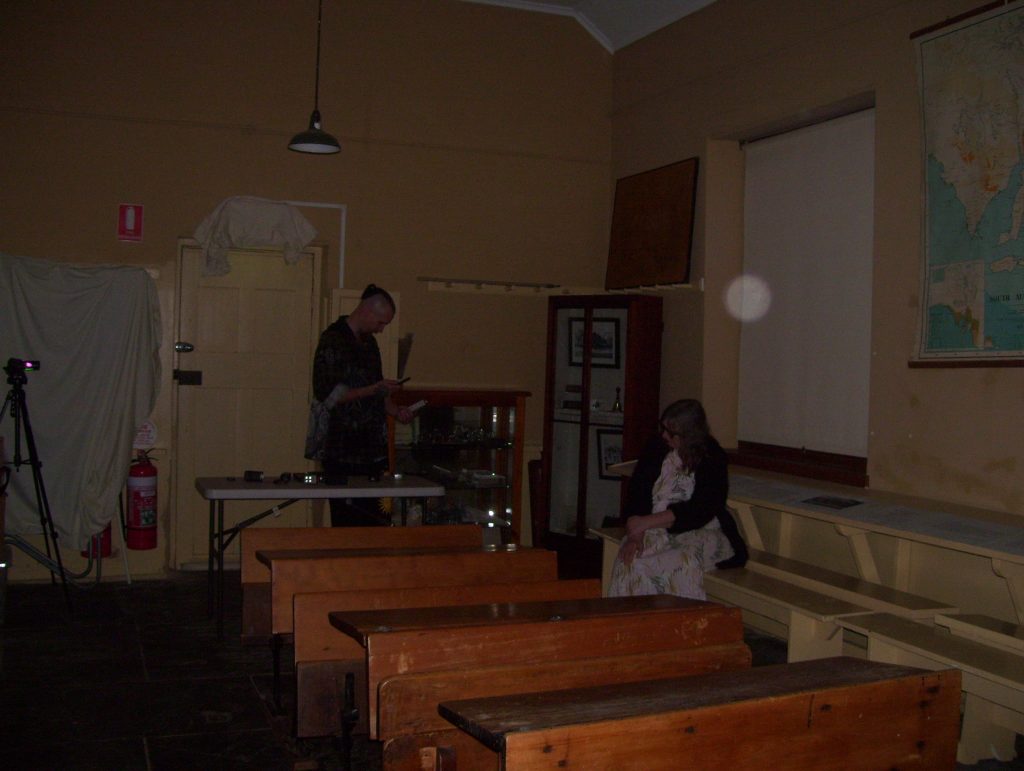
Paranormal investigation rarely looks like it does in movies. There are no constant jump scares, no continuous activity, no dramatic moments back-to-back. Most investigations are long stretches of quiet observation, patience and documentation. Hours can pass with nothing more than subtle sounds, environmental shifts or fleeting impressions that are easy to second-guess.
But every investigator eventually experiences a night that stands apart from all the others – not because of constant activity, but because of a single moment where everything changes.
This was one of those nights.
What began as calm, almost gentle communication ended in an oppressive silence so complete that it felt intentional. The events of that investigation didn’t just unsettle us in the moment – they reshaped how we approached communication, provocation and responsibility during investigations going forward.
This is a personal paranormal experience, shared not as a definitive explanation of the unknown, but as a documented account of what we experienced, felt and observed as a team.
The Location and the Decision to Investigate Overnight
The investigations took place late at night, well past the point where the world outside had gone quiet. We often conduct investigations overnight, not because we believe paranormal activity only happens after dark, but because nighttime offers fewer variables.
Want to know why we investigate at night time? Look right here…
Less traffic.
Less background noise.
Less human interference.
When investigating claims of paranormal activity, removing as many environmental factors as possible is critical. The quieter the environment, the easier it becomes to notice subtle changes – shifts in temperature, pressure, sound or atmosphere that might otherwise be dismissed.
The room we were in was already pitch black. No windows letting in light. No artificial glow. No torches unless absolutely necessary. Darkness isn’t used for theatrics – it’s used because it allows us to observe how a space naturally feels without constant visual stimulation.
Our Approach to Equipment and Communication
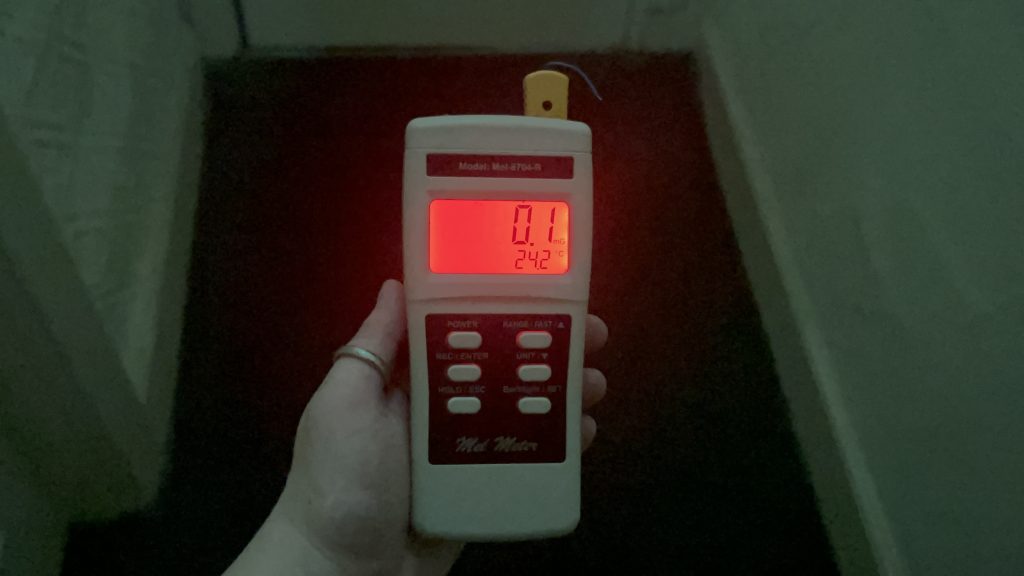
Among the equipment we were using that night was the Ovilus, a device designed to convert environmental readings into words. Like many tools in paranormal investigation, it’s controversial – and rightly so.
We don’t treat any single piece of equipment as proof.
We don’t take words at face value.
We don’t rely on devices without context.
Instead, we use tools like the Ovilus as communication aids, looking for patterns, relevance and correlation with what investigators are experiencing physically and emotionally in the space.
Context is everything.
A random word means very little.
A relevant word, at a relevant moment, witnessed by multiple people, means something else entirely.
The First Signs of Communication
At the start of the session, nothing felt out of the ordinary. The room was quiet, the atmosphere neutral. As questions were asked calmly and respectfully, the Ovilus began producing words.
Then one word appeared that immediately caught our attention:
“Mommy”
At first, we noted it but didn’t react. True investigators are trained not to jump to conclusions, especially with emotionally charged words. But when the word appeared again – and then again – it became hard to dismiss.
What made it stand out was when another member of my team – yes, my mother is part of our team – came into the room, and I had her begin asking quesions for this entity. There was a few back of forwards between them.
Mum: “Who are you?”
Ovilus: “Daughter”
Mum: “Why are you here?”
Ovilus: “Passed”
A Shared Sensation, Not a Spoken Suggestion
This is an important detail.
No one said “It feels like a child.”
No one asked “Could this be a little girl?”
The sensation was internal, unspoken and not confirmed until a little bit later when we were discussing and comparing notes. That kind of shared impression carries more weight than a single persons feeling – not as proof, but as a pattern worth acknowledging.
The energy felt small.
Quiet.
Non-threatening.
There was no sense of aggressions, no pressure, no intimidation. If anything, it felt hesitant – as though the presence was cautious about communicating.
The Sudden Shift: A Single Word that Changed Everything
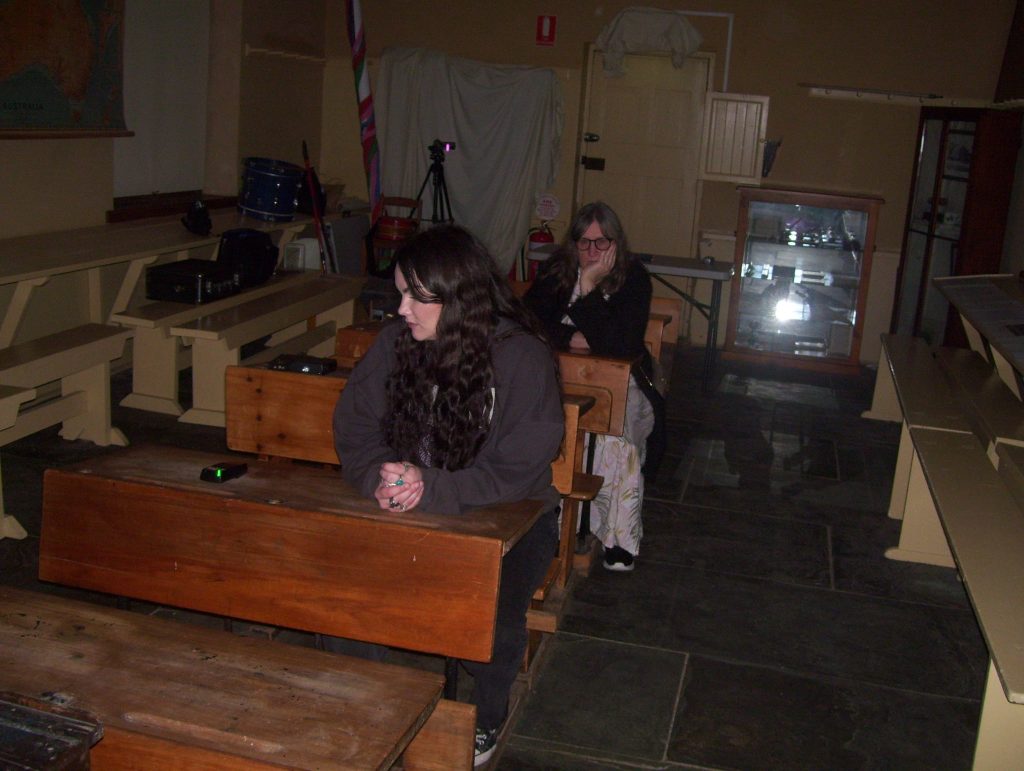
Without any escalation in questioning, without provocation or challenge, the Ovilus suddenly produced a new word:
“Run”
The atmosphere in the room had just begun to change instantly.
Not because we panicked – we didn’t – but because urgency carries weight. We paused, acknowledged the word, and did what investigators are meant to do: we asked for clarification.
“What do you want us to run from?”
There was a short pause.
Then another word appeared on the Ovilus:
“Hide”
This wasn’t a random sequence of unrelated words. It was structured. Directional. Intentional.
Again, we followed up calmly.
“What do you want us to hide from?”
The response on the Ovilus was almost immediate:
“Demon”
When the Room Itself Responded
The moment that word appeared, something changed that had nothing to do with the equipment.
The room became darker.
It’s difficult to explain this to someone who hasn’t experienced it. The room was already pitch black – yet the deepening of the darkness in the room could still be seen. As if shadows themselves became heavier.
The air thickened.
Breathing felt more laboured.
The space felt compressed.
The atmosphere felt oppressive.
Every investigator present felt it at the same time.
This wasn’t fear.
It wasn’t imagination.
It was a physical as visual sensation – one that settled into the room and refused to lift.
The Silence that Followed
Then, just as abruptly as the change occured, all comunication stopped.
The Ovilus went silent.
No more words.
No more responses.
It felt as though the presence we had been communicating with – the one we believed to be a young girl – had vanished instantly.
Not faded.
Not drifted.
Gone.
The absense was profound.
Making the Decision to Challenge the Presence
At this point, we faced a choice every investigation team eventually has to make:
Withdraw – or confront.
Obviously being us, we chose to confront it.
Rather than reacting emotionally, we adressed the presence calmly, firmly and deliberately. We spoke directly to the oppressive energy in the room, telling it that it had no right to interfere with or harm other entities that were present.
This wasn’t theatrical provocation.
There was no shouting.
There was some taunting however.
It was controlled, firm and intentional.
I personally challenged it, told it to use my energy and to attack me. When it did nothing to us
We told it to leave the other spirits and ghosts alone.
No Immeadiate Response – Just Pressure
There was no verbal response.
No confirmation through equipment.
But the pressure in the room remained.
It felt as though something was still there – listening, observing but refusing to engage. Sometimes, silence itself is a form of control.
It wasn’t until a later investigation that this same entity would actively accept my challenge – an experience that deserves its own post.
Searching for the Young Spirit Again
Once we felt the confrontation had reached its natural end, we attempted to re-establish communication with the young spirit.
We asked calmly.
We waited.
We monitored the environment.
Nothing.
No words.
No familiar responses.
No sense of that gentle presence we had felt earlier.
It was as though she had done exactly what she wanted us to do:
She ran.
She hid.
And she stayed hidden.
The Emotional Weight of Absence
This was, in many ways, the most unsettling part of the night.
Not fear.
Not aggression.
But loss.
The sense that something vulnerable had been forced into silence by something far stronger. The absence felt deliberate, protective and final – at least for that investigation.
Reflection: What This Experience Taught Us
We cannot say with certainty what entered that room.
We cannot definitively label the presence.
We can only document what happened.
What we do know is this:
- multiple investigators independently sensed the same presence
- Communication was contextually relevant and structured
- The environmental shift was sudden and shared
- Silence followed immediately after the warning
- The oppressive energy felt distinctly different from earlier sensations
Whether the word “demon” was literal, symbolic or influenced by environmental factors remains open to interpretation. But the urgency, fear and disappearance that followed cannot be dismissed.
Final Thoughts: When the Quiet is the Evidence
Paranormal investigation isn’t about chasing danger or proving beliefs.
It’s about listening.
It’s about responsibility.
And it’s about recognising when silence is trying to tell you something.
That night didn’t give us answers.
It gave us perspective.
Whatever entered that room changed everything – and whatever we were communicating with before it arrived seemed to know exactly what was coming.
She warned us.
She hid.
And then she was gone.
Sometimes, the most powerful paranormal evidence isn’t what speaks to you in the dark…
It’s what suddenly can’t.