Among the most haunting and enduring figures in paranormal folklore, the Banshee stands out as one of the most recognisable harbingers of death. Often described as a wailing woman whose cry echos through the night before tragedy strikes, the Banshee has roots woven deeply into Celtic mythology. Yet, what many people don’t realise is that the Banshee is part of a much larger archetype – a universal tradition of wailing spirits found in cultures across the world.
From ancient Ireland to rural Scotland, from the windswept coastlines of Wales to historic estates in England, variations of the Banshee appear again and again, suggesting that humanity has long believed death does not arrive quietly.
In this post, we explore the first historical mentions, regional versions, wailing spirit traditions, global entities that align with the banshee archetype, how to identiy one during an investigation and real-world case studies that continue to fuel the legend.
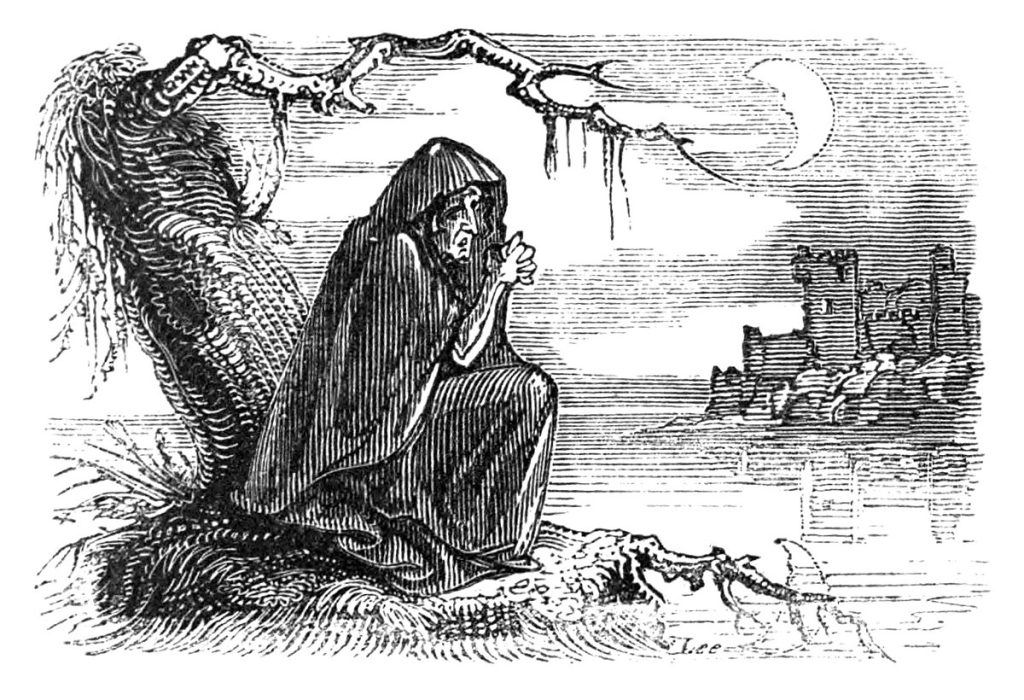
Historical Origins of the Banshee
The earliest recorded mentions of the Banshee appear between the 8th and 12th centuries, although oral lore predates these sources by by hundreds, if not thousands of years.
Bean Si: Woman of the Fairy Mound
The word Banshee comes from the Irish Bean Sidhe/ Bean si, meaning “woman of the fairy mound“. The sidhe mounds were believed to be entrances to the Otherworld – the domain of the ancient Tuatha De Danann. Because of this connection, early Banshees were not ghosts of the dead, but supernatural fae beings.
Ancestral Spirits and Gaelic Lineage
In the earliest interpretations:
- Banshees acted as ancestral guardians.
- Only appearing to families of noble Gaelic bloodlines.
- Particularly those who surnames began with O’, Mac or Mc.
Their cry was not originally a curse – it was a warning.
Keening Women: The Human Parallel
Historically, Ireland had paid keeners, women who performed sorrowful wails at funerals. As this custom faded, some believed that supernatural keeners had taken their place – eternally mourning the dead.
Cultural Variants of the Banshee
Although the Irish Banshee is most widely recognised, close cultural cousins appear throughout Celtic regions.
Ireland – The Traditional Banshee (Bean Si)
Forms and Appearances
Irish lore describe her as:
- A beautiful young woman (symbolising tragic death).
- A motherly patron (symbolising guidance).
- Or a small shrivelled crone (symbolising ancient wisdom)
Some stories say she shifts between all three.
Behaviour
- Does not cause death.
- Appears before death or serious misfortune.
- Sings or keens rather than screams.
Scotland – The Bean Nighe
The Bean Nighe meaning “Washer Woman” is one of the closest relative to the banshee.
Traits
- Seen washing blood-soaked clothes of those doomed to die.
- Frequently apears near streams and riverbanks.
- Sometimes described with fae-like deformities.
The Bean Nigher sits at the boundary between life and death, tied to water as a spiritual threshold.
Isle of Man – The Caointeach
A more interactive – and at times agressive – variant.
Characteristics
- Known to sit on a persons chest (sleep paralysis-like reports).
- Cries loudly outside homes.
- Has a reputation for being more confrontational than Irish banshees.
Wales – The Cyhyraeth
A wailing spirit strongly connected to coastal tragedy.
Behaviour
- Rarely seen, primarily heard.
- Lets out three moans, each quieter than the last.
- Associated with drownings, storms and sea-related deaths.
The “Wailing Spirit” – Another Form of the Banshee Archetype
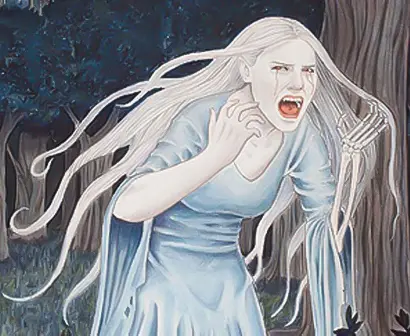
The idea of a Wailing Spirit appears across Europe – sometimes conneted to a bloodline, sometimes tied to a location and sometimes simply appearing as a messenger of sorrow.
What Makes a Wailing Spirit?
A wailing spirit is typically:
- A feminine presence
- Heard crying, moaning or lamenting
- Seen or heard before tragedy
- Emotionally tied to a place or lineage
These spirits are non inherently evil. They are harbingers, mourners or echoes.
How Wailing Spirits Connect to the Banshee
The similarities are striking:
- Both warn rather than harm.
- Both manifest through sound first, visual form second.
- Both are associated with deep grief and emotional atmosphere.
- Both appear during liminal moments – crossroads, threshold, night, waters edge.
Many folklorists consider the Wailing Spirit a geographical extension of the Banshee belief – the same archetype, evolving in different cultures.
Global Entities Connected to the Banshee Archetype
Multiple cultures share legends of weeping or mourning spirits who foretell death or tragedy. These are not demonic entities, but parallel forms of the Banshee.
Norwegian Fylgja
- A spiritual guardian attached to families.
- Appears as a woman or animal.
- Seen before major events – including death.
Japanese Yurei (Crying-Onryo Types)
Some Yurei manifest through:
- soft crying
- emotional outbursts
- Appearance before tragedy or misfortune
While Japanese ghosts differ culturally, the emotional and auditory connection is unmistakable.
Filipino Mourning Spirits
Various regional stories describe:
- A crying woman
- Appearing at sites of past death
- Warning of reflecting emotional trauma
These spirits are not malicious but bound to sorrow.
Native American Death-Wail Spirits
Without naming specific tribal lore, several traditions include:
- Female spirits heard wailing before death or battle.
- Seen as watchers or spiritual messengers.
English “Mourning Lady”
Found around old manors and estates.
Characteristics:
- Appears or cries before a family death
- Often tied to century-old ancestral trauma
- Functions almost identically to Irish banshees attached to family lines.
Germanic Wehklagegeist (Lamenting Spirit)
- A moaning, sorrowful apparition
- Associated with illness and death
- Historically taken very seriously in rural households.
How to Identify a Banshee During a Paranormal Investigation
Identifying a Banshee or wailing-type spirit requires attention to sound, atmosphere and emotional signatures.
1. Distinctive Wailing or Keening
EVP recordings and eyewitness reports describe:
- A layered, echoing cry
- Melodic lamentations
- A voice that sounds both distant and nearby
The sound often carries despite windless nights.
2. Emotional Atmosphere
Common investigator experiences include:
- Sudden heaviness or grief
- A feeling of being watched
- Pressure in the chest
- Silence in wildlife
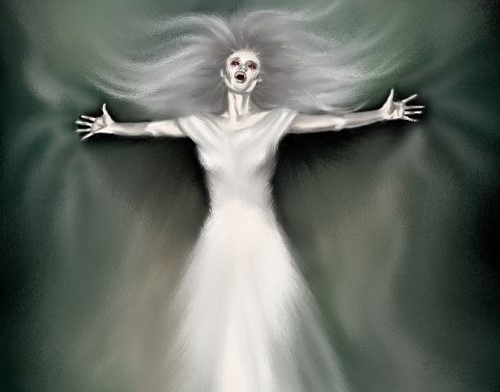
3. Visual Manifestations
Though rare, witnesses report:
- A pale woman in white or grey
- A glowing or translucent figure
- A shadowy feminine form
- A crone-like being with long hair
4. Environmental Triggers
You may encounter manifestations near:
- Streams or rivers (Bean Nighe behaviour)
- Ancestral homes
- Old roads and crossroads
- Areas associated with past deaths
5. Behavioural Patterns
- Appears moments, hours or days before a death
- Does not cause the death
- Often appears to one individual involved in the upcoming event (not always the one who’s about to go through the event, but sometimes someone who is close to the person)
Real Case Studies
Case 1 – The O’Brien Ancestral Wail (Ireland, 1700s)
Several family members heard a woman singing a lament outside their manor. Hours later, a distant relative died suddenly. Witnesses describe the voice as “not human, not earthly”.
Case 2 – The Bean Nighe of Mull (Scotland, 1921)
Two fisherman saw a woman washing bloodstained clothing in a stream. A fatal boat accident occurred days later involving their relatives.
Case 3 – The Dartmoor Wailing Spirit (England, 1894)
A coach driver encountered a crying woman on the roadside. She vanished when approached. Days later, a local priest died at the exact location.
Case 4 – The Adelaide Banshee (Australia, 1978)
Irish-descendant families heard an intense, sorrowful wail echoing through their cul-de-sac at 3am. Someone on the street passed away later that morning. No physical source of the sound was ever identified.
Case 5 – The Cyhyraeth Moans (Wales, 1900s)
Coastal workers heard three identical moans over several nights. A major shipwreck occured shortly after in the same waters.
Case 6 – The Mill Wailing Spirit EVP (USA 1960s)
Investigators captured nightly crying at the exact same time. Research later revealed a tragic death at the mill more than a century earlier.
Final Thoughts
The Banshee and her global counterparts share an unmistakable thread – the believed that death announces itself, not through violence but through sorrow. Whether they are ancestral fae, wailing spirits tied to trauma or culturally unique death omens, these entities form one of the most widespread supernatural archetypes in human history.
Related Posts:
- https://paranormaldownunder.com/spirit-guides-history-types-and-communication/types-of-entities/
- https://paranormaldownunder.com/demonic-entities-annabelle-case-permission-possession-protection/types-of-entities/
- https://paranormaldownunder.com/ghost-vs-spirit-whats-the-real-difference/types-of-entities/
- https://paranormaldownunder.com/how-to-use-a-spirit-box-guide/how-to-guides/
- https://paranormaldownunder.com/cleanse-protect-yourself-paranormal-investigation/how-to-guides/