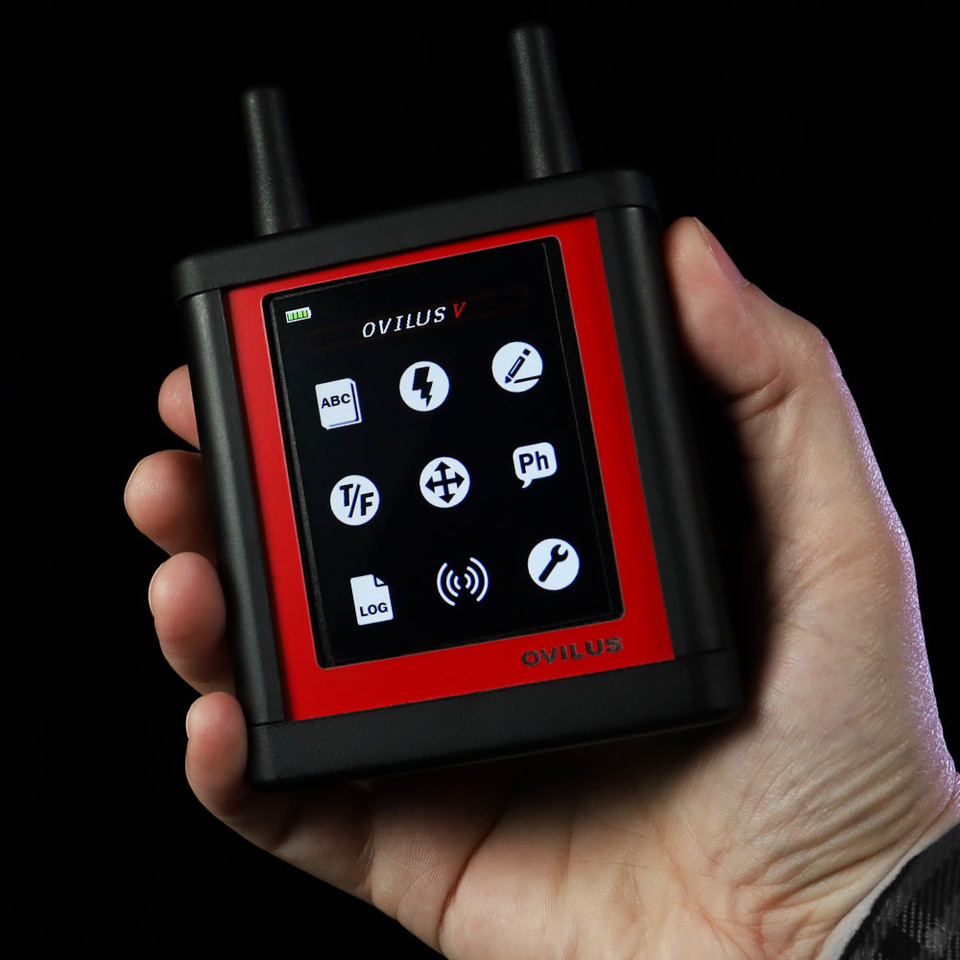
The Ovilus has become a staple in modern paranormal investigations, and it’s one of the most requested tools by newcomers wanting to explore the unseen. On Paranormal Down Under, we aim to demystify the gear we use, explain its real potential and provide clear steps for investigators of all experience levels.
While we have a separate deep-dive post covering what the Ovilus is, who invented it and how it works, this guide focuses on one thing: how to actually use the Ovilus properly during a paranormal investigation, whether you’re a beginner or an experienced researcher.
Below you’ll find setup instructions, beginner and advanced techniques and a full breakdown of the Ovilus’ modes – especially the commonly misunderstood Q&A mode, which allows phrase-style output and often becomes the most compelling part of a session.
What the Ovilus Does (Short Summary)

The Ovilus converts changes in environmental energy – such as EMF fluctuations, static charge, temperature shifts and digital noise – into audible or onscreen words.
It does not “translate” spirits in a literal sense. Instead, the theory is that spirits can influence these energy changes to form intelligent communication.
Because of this, the Ovilus has become one of the most intriguing devices for capturing potential direct responses, matched phrases and context-specific communication.
Understanding the Ovilus Modes
Different modes allow different types of communication. Knowing how each one works is essential.
Dictionary Mode (Most Common Mode for Investigators)
Dictionary mode selects full words from the device’s built-in vocabulary based on the energy fluctuations around it.
Most investigators use this mode for:
- question-and-answer sessions
- location-specific questioning
- historical validation
- identifying names, objects or events.
When a word links directly to your question or the known history of a site, that is when the Ovilus becomes most intriguing.
Q&A Mode (Three Words at Once – Sentence-Style Communication)
Q&A mode is one of the most misunderstood features of the Ovilus, yet it can be one of the most powerful when used correctly.
Instead of giving a single word, Q&A mode displays three words at a time, allowing for short phrases or sentence-like communication.
Important:
The three words do not always appear in the correct sentence order.
It is up to the investigator to interpret the meaning based on:
- the question asked
- the location
- context clues
- recurring themes
- previous responses
This makes Q&A mode ideal for complex sessions where entities may be trying to convey more than a single idea at a time.
How to Use Q&A Mode Effectively
- Read all three words together as a group.
- Rearrange the order logically depending on the context.
- Look for repeated themes (names, emotions, locations)
- Ask open-ended questions like:
- “Can you describe what happened here?”
- “What message do you want us to know?”
- Compare Q&A mode phrases with previous dictionary mode responses.
Example Interpretation
Investigator: “What happened in this room?”
Ovilus Output: Burn/Pain/Upstairs
Possible interpretation: “Pain from a fire upstairs.”
Q&A mode often reveals conversations rather than isolated responses.
Phonetic Mode (Raw Sound Output)
In phonetic mode, the Ovilus produces phonetic syllables instead of full words. This mode is used by experienced investigators searching for:
- partial names
- repeated sound patterns
- emergin word formations
It bypasses the dictionary entirely, giving more raw, unfiltered output.
Environmental & Energy Modes
These ancillary modes help with:
- baseline EMF readings
- temperature comparisons
- atmospheric monitoring
- detecting environmental spikes before or during sessions
These modes are valuable for debunking or confirming unusual changes.
How to Set Up the Ovilus for a Reliable Investigation
Correct setup ensures the Ovilus performs as intended and reduces false positives.
Charge the Device Fully
A low battery can cause unpredictable or unstable output.
Choose a Low-Interference Area
Avoid placing the Ovilus near:
- electrical wiring
- routers
- metal structures
- active appliances
- phones or radios
Take EMF Baselines First
Use an EMF meter to map the normal levels in the room.
This gives you something to compare unusual spikes against.
Place the Ovilus on a Stable Surface
Movement, vibration and uneven surfaces can all cause random words.
Record Everything
Audio recorders, video cameras and static cameras are essential for reviwing timing and context.
Beginner Tips for Using the Ovilus
- Ask Clear, Direct Questions: Short, simple questions give clearer results.
- Leave Space Between Questions: 10-20 seconds is ideal to allow environmental variance.
- Don’t Chase Every Word: Not every output has meaning – context matters.
- Keep Still, Keep Quiet: Movement and whispering influence energy readings.
- One Speaker Only: This helps match timing to questions during review.
Advanced Ovilus Techniques (For Serious Investigators)
Run Structures Sessions
- One questioner
- No overlapping commentary
- No electronics close to the device
- Silence between responses
Paor Q&A Mode With Dictionary Mode
If dictionary mode produces a strong or historically relevant word, switch to Q&A mode to see if it expands on the story.
Use Trigger Objects
Place historically relevant items near the device such as:
- old tools
- photographs
- clothing
- documents
- personal belongings
Ask the Ovilus about those specific objects.
Look for Multi-Device Validation
Most compelling when Ovilus responses match:
- EMF spikes
- REM pod hits
- footsteps
- cold spots
- motion sensor triggers
Track Repeated Names or Themes
If the same name appears across separate investigations, treat it as significant.
How to Debunk Random Words vs Genuine Responses
Not every output is paranormal. Knowing how to identify real patterns is essential.
1. Context is Everything
Genuine responses often:
- match the exact question
- reference known history
- align with objects in the room
- appear in clusters
Random responses:
- relate to nothing
- appear during movement
- contradict the theme
2. Timing Matters
A meaningful response often appears within 3-10 seconds after the question.
3. Look for Patterns, Repetition and Themes
Single words = weak or false evidence
Repeated themes or Q&A phrases = stronger evidence
4. Check for Interference
Words may be caused by:
- moving the device
- phones searching for signal
- metal scraping
- HVAC systems
- footsteps
Mark any corrupted moments as inconclusive.
5. Ask Control Questions
Purposefully impossible questions test the devices randomness.
If nonsense appears (which is normal), but the device becomes meaningful immediately after, that contrast is valuable.
6. Compare With Baseline Sessions
Words that appear often during “quiet room” sessions could be environmental not paranormal.
Final Thoughts: Using the Ovilus the Paranormal Down Under Way
When used correctly, the Ovilus can deliver surprisingly relevant and intelligent responses – especially when investigators rely on structure, debunking and context over excitement.
Understanding Dictionary mode, the flexible sentence-style nature of Q&A mode and the raw output of phonetic mode allows you to unlock deeper layers of communication. Combined with environmental data and multi-device validation, the Ovilus becomes one of the most powerful tools for exploring potential spiritual activity.
Related Posts:
- https://paranormaldownunder.com/ovilus-guide-history-how-it-works/equipment/
- https://paranormaldownunder.com/night-visions-cameras-in-paranormal-inestigations-seeing-beyond-the-darkness/equipment/
- https://paranormaldownunder.com/evp-recorders-capturing-voices-from-beyond-proven-techniques-for-paranormal-investigations/equipment/
- https://paranormaldownunder.com/spirit-boxes-paranormal-communication/how-to-guides/
- https://paranormaldownunder.com/real-paranormal-encounter-locked-1851-cells/personal-experiences/