In the world of ghost hunting and paranormal research, few tools are as intriguing, or as essential, as the EVP recorder. Believed to capture disembodied voices or mysterious sounds from beyond the veil, EVP (Electronic Voice Phenomena) recordings have become one of the most compelling forms of evidence in the field of paranormal investigation.
Whether you’re a seasoned investigator or a beginner curious about the unseen, understanding how EVP recorders work, and how to use them effectively, can make all the difference in uncovering authentic, unexplained voices.
In this guide, we’ll explore what EVP recorders are, how they’re used and several professional investigation techniques that can help you capture credible evidence of spirit communication.
What is an EVP Recorder?
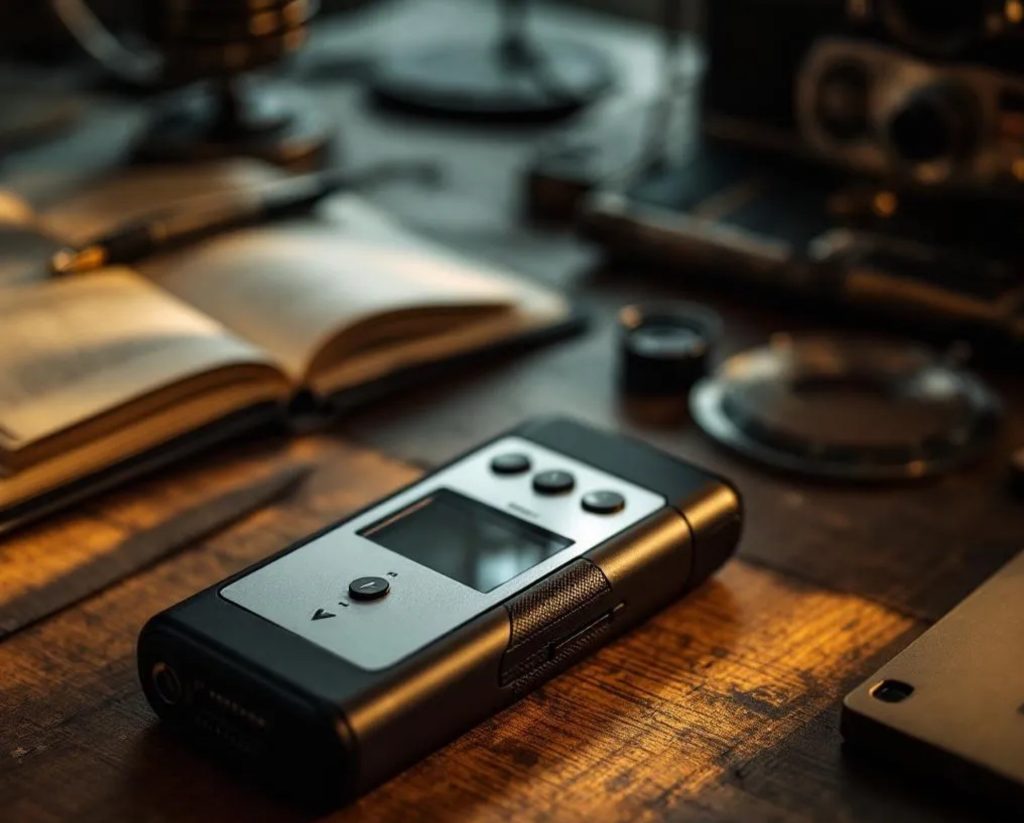
An EVP recorder, or Electronic Voice Phenomenon recorder, is a digital audio device used in paranormal investigations to capture unexplained sounds that may not be audible to the human ear in real time. These sounds, commonly referred to as EVPs, are often only discovered during careful playback and audio analysis, which is why recording quality and reliability are essential.
Unlike everyday recording devices, EVP recorders are built with high-sensitivity microphones and low-noise components designed to pick up subtle environmental changes. While standard recorders can sometimes capture unexplained audio, dedicated digital recorders are generally preferred by investigators due to their ability to preserve faint sounds without excessive distortion or interference.
Smartphone microphones are usually avoided in serious investigations, as audio compression, noise reduction, and automatic processing can remove or alter low-level sounds. EVP recorders typically capture a wider frequency range in cleaner, less-compressed formats, allowing investigators to review raw audio data more accurately using professional analysis software.
Another advantage of EVP recorders is their suitability for long recording sessions. Investigators often leave devices running during static vigils or unattended monitoring, where stable battery life, reliable storage, and organised file management become critical. More advanced teams may also use multiple recorders in synchronised setups to compare results, confirm timestamps, and rule out false positives such as environmental noise or radio interference.
Within the Paranormal Down Under methodology, EVP recorders are viewed as documentation tools rather than evidence of proof. Their purpose is to capture potential anomalies in a controlled, methodical way, supporting careful analysis, sceptical review, and responsible paranormal research.
How Do EVP Recorders Work?
The theory behind Electronic Voice Phenomena suggests that spirits, entities, or residual environmental energy may be able to influence ambient sound frequencies or electromagnetic fields to form speech-like sounds. Rather than creating sound in the traditional sense, these anomalies are thought to emerge through subtle manipulation of background noise, static, or existing audio energy. As a result, EVPs are often not heard during the recording session itself and only become noticeable during careful playback and analysis.
EVP recorders work by continuously capturing environmental audio at a high level of sensitivity, preserving sounds that would normally go unnoticed by the human ear. When recordings are later reviewed—often with headphones and audio software—investigators may identify brief vocalisations, whispers, or tonal patterns that appear disconnected from known environmental sources. This delayed discovery is one of the defining characteristics of EVP research and underscores the importance of controlled recording conditions and objective review.
Within paranormal investigation, EVPs are commonly grouped into three classification levels based on clarity. Class A EVPs are clear, direct, and easily understood without enhancement, though they are relatively rare. Class B EVPs are more common and are partially intelligible, often requiring light filtering or volume adjustment to interpret. Class C EVPs are faint, distorted, and highly subjective, making them the most debated and least reliable category.
Most EVPs considered credible fall into the Class B range, where voices are present but not unmistakably clear. This makes disciplined analysis essential, as investigators must carefully rule out contamination, audio artefacts, and psychological suggestion before drawing conclusions. In the Paranormal Down Under approach, EVP classification is used as a framework for discussion rather than validation, reinforcing the importance of caution, transparency, and evidence-based investigation.
Why EVP Recorders Are Vital in Paranormal Investigations
EVP recorders bridge the gap between the physical and spiritual worlds. While other tools, like EMF detectors or motions sensors, can indicate activity, EVP offers something far more compelling: potential communication.
Investigators use EVP recorders to:
- Capture spirit voices or whispers that respond to questions.
- Gather contextual evidence linked to specific events or objects.
- Document unexplained phenomena occurring simultaneously with other readings (such as EMF spikes or temperature drops).
EVP sessions often serve as the core evidence of an investigation, providing moments where the unseen makes its presence known through sound.
Proven Techniques for Capturing EVP
There’s both art and science involved in conducting EVP sessions. Success often depends on your patience, environment and approach. Below are some of the most reliable EVP techniques used by investigators worlwide:
1. Direct Question and Answer Sessions
This is the foundation of EVP work. Investigators ask clear, direct questions and leave gaps of 10-15 seconds between each to allow potential responses. Keep questions simple, respectful and open-minded.
Example Questions:
- “Is anyone here with us tonight?”
- “Can you tell us your name?”
- “Do you know what year it is?”
- “Why are you here?”
It’s important to maintain a calm and inviting tone, spirit communication is often said to be influenced by energy and intent.
2. Controlled Silence Sessions
Not all EVP captures come from direct questioning. Some of the most startling voices appear during moments of silence, when investigators aren’t speaking at all.
In this technique, you allow the recorder to run in a quiet room for several minutes. No questions, no movement, just ambient recording. These “passive captures” are considered [pwerful because they occur naturally, without investigator input.
3. Trigger Object Sessions
A trigger object is an item believed to provoke interaction or recognition from a spirit. This can include toys, old coins, jewelry, tools, photographs or anything linked to the history of the location or the spirit.
You can set a recorder near the trigger object and ask relevant questions:
- “Did this belong to you?”
- “Can you move this for us?”
- “Does this object mean something to you?”
By giving spirits something familiar or emotionally charged, you increase the likelihood of a response.
4. EVP Burst Sessions
An EVP burst session is one of the most effective modern techniques in ghost hunting. Instead of recording for hours and sifting through endless audio later, investigators conduct short, focused recording sessions. Usually 2 to 5 minutes long (Although i often only do 30 to 60 seconds), followed by immediate playback.
During playback, the team listens for responses in real time. If something is captured, investigators can then ask follow-up questions based on the potential response, adjusting their line of inquiry instantly.
Benefits of Burst Sessions:
- Faste feedback and more dynamic interaction.
- Better control over environmental changes (like footsteps or background noise).
- Easier to isolate and tage responses.
This technique not only saves review time but also enhances the sense of real-time communication during an investigation.
5. Tagging Sounds for Accuracy
Environmental sounds, like footsteps, whispers or coughing, can easily be mistaken for EVPs during review if not properly documented. Professional investigators use a method known as tagging to verbally note any noises they make during a sessiosn.
For Example:
- “That was me moving the chair.”
- “That sound was from the hallway.”
- “(name) just coughed.”
Tagging helps you eliminate false positives later and keeps your evidence credible when sharing with others.
6. Multiple Recorder Placement
To verify the authenticity of a sound, many investigators place two or more recorders in different areas of the investigation site. If a voice is captured on only one recorder, it may indicate a localized anomaly rather than a sound coming from a human source or external interference.
This technique also helps rule out echoes, contamination and overlapping dialogue between team members.
7. Time-Staggered Recording Sessions
Paranormal activity can fluctuate depending on the time of night or the energy in the environment. Conducting EVP sessions at different intervals, early evening, midnight, pre-dawn, can help identify activity patterns and determine when communication is strongest.
Some investigators report increased results during what’s known as the “Witching Hour” (3:00 a.m.), when spiritual energy is believed to be most active.
Reviewing and Analyzing EVP Recordings
After a session, the real work begins. Proper analysis ensures your findings remain credible and professional.
Tips for Reviewing EVP Recordings:
- Use high-quality headphones to catch subtle whispers or low-frequency sounds.
- Listen in a quiet room and play sections multiple times before labeling them as EVP.
- Cross-check timestamps across multiple recorders and cameras.
- Avoid over-editing or applying heavy filters, keep the raw audio intact for authenticity.
- Keep a detailed logbook noting time, location, questions asked and responses heard.
Remember: credible evidence speaks for itself. Over-interpretation or enhancement can weaken your findings.
Professional Tips for EVP Success
- Stay Respectful: Treat every investigation as if you are entering someone’s space.
- Keep Sessions Short and Focused: Spirits may respond better to short bursts of attention rather than long, drawn-out recordings.
- Minimize Contamination: Keep teams small to avoid whispering during active recording.
- Document Everything: Combine your audio evidence with notes, video and environmental readings.
Final Thoughts
EVP recorders are more than just gadgets, they are the voice of the unknown, offering a rare chance to connect with energies and entities that exist beyond our understanding.
By using professional techniques like EVP burst sessions, tagging and trigger objects, investigators can capture more compelling, credible evidence while maintaining scientific discipline and respect for the unseen.
Whether you’re a beginner exploring your first haunted location or a veteran ivnestigator chasing that elusive Class A EVP, remember: patience, precision and respect are your greatest tools.
So the time you hit “record”, you might just hear something… unexpected.
3 thoughts on “EVP Recorders: Capturing Voices from Beyond & Proven Techniques for Paranormal Investigations”