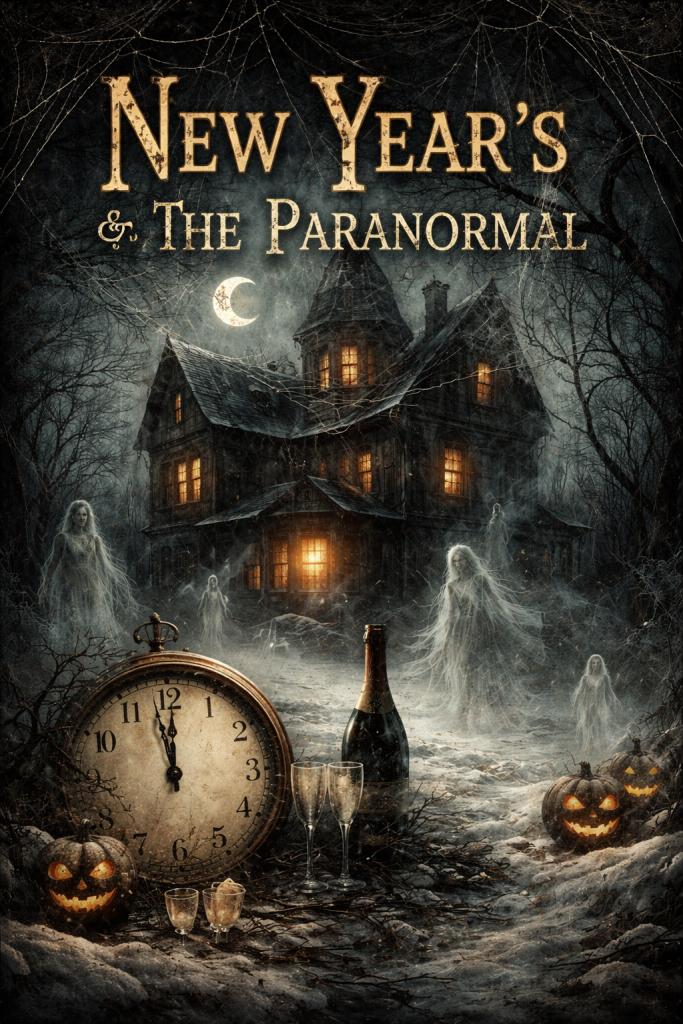
New Years Eve is one of the few moments on Earth experienced almost collectively. Across time zones and cultures, people pause to acknowledge the end of something familiar and the beginning of something unknown. Fireworks fracture the night sky, voices count down in unison and at midnight, the world briefly holds its breath.
From a paranormal perspective, this moment has always carried far more weight than celebration alone.
For centuries, belief systems across the globe have treated the New Year as a spiritually volatile threshold – a liminal moment where time resets, boundaries soften and unseen forces are more active. Much like Samhain or the Winter Solstice, the transition between years has been linked to spirits, omens, ancestral presence and heightened paranormal phenomena.
But why does the New Year feel different? Why do so many cultures warn of spiritual vulnerability at this time? And why do investigators often report increased paranormal experiences around the end and beginning of the year?
Liminal Time and the Paranormal Nature of the New Year
In paranormal theory, liminal spaces are areas or moments that exist between defined states – doorways, crossroads, twilight, abandoned buildings or transitional hours. These spaces often feel unsettling or charged because they do not belong fully to one condition or another.
Time itself can be liminal.
The New Year represents a rare moment when time is consciously acknowledged as ending and beginning. The old year symbolically “dies” at midnight, and the new year is “born” seconds later. During this transition, structure dissolved – routine, expectation and certainty are temporarily suspended.
Many paranormal researchers believe that liminal time allows spiritual energy to move more freely, just as liminal spaces do. This may explain why people often report heightened intuition, unusual dreams, unexplained sounds or feelings of presence during the New Year period.
Ancient Civilisations and the Spirit World at Years End
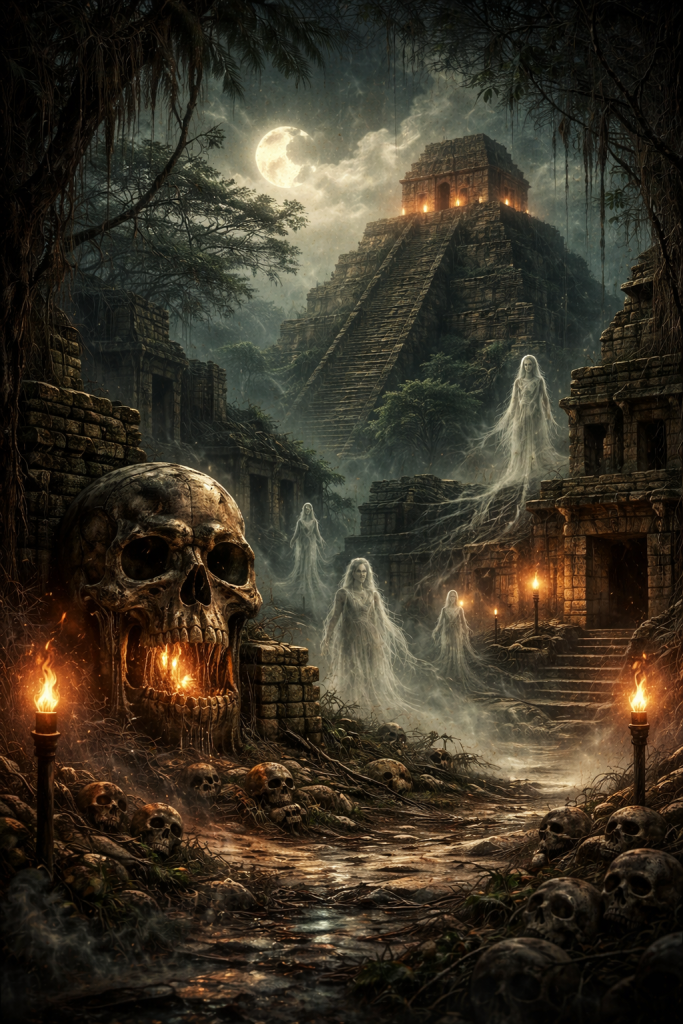
Long before modern calendars, New Year celebrations were deeply spiritual and protective in nature.
In ancient Mesopotamia, the Akitu festival marked the New Year and was believed to restore cosmic order. It was thought that chaotic spiritual forces were stronger at this time, and that the gods actively judged humanitys worthiness for the coming year.
The Romans dedicated the New Year to Janus, the two-faced god of doorways, thresholds and time. Janus looked simultaneously into the past and the future, embodying the exact liminal nature of the New Year. Offerings were made not only for good fortune, but for protection against malevolent forces believed to wander freely during transitions.
Celtic traditions also viewed the turning of the year as spiritually dangerous. Spirits of the dead were believed to roam, ancestral energies resurfaced and careless behaviour could invite misfortune or attachment.
Across cultures, the message was consistent: the New Year was powerful, unstable and required respect.
New Years Eve as a Spirit Window
In modern paranormal investigation, certain periods are often referred to as spirit windows – times when emotional energy, symbolism and environmental conditions combine to heighten activity.
New Years Eve contains several of these elements simultaneously:
- Collective emotional release
- Reflection on loss, time and mortality
- Ritual behaviour and intention setting
- Midnight symbolism
- Chaos followed by sudden stillness
Investigators often report increased EVP responsiveness, unexplained sounds, shadow movement and emotional sensations during New Year investigations. Some theorise that the collective human focus on endings and beginnings creates a measurable energetic shift, temporarily altering environmental conditions.
Whether psychological, energetic or something more, the effect is difficult to ignore.
Residual Energy and Emotional Imprinting at the Turn of the Year
Paranormal theory has long linked strong emotion to residual hauntings and energy imprints. New Years Eve is emotionally complex – joy exists alongside grief, longeliness, regret and remembrance.
For many, the New Year highlights absence. Loved ones lost, relationships ended, opportunities missed. These emotional undercurrents may unintentionally interact with already-charged environments, amplifying paranormal experiences.
At Paranormal Down Under, we often discuss the idea that energy does not disappear – it accumulates. During emotionally intense nights like New Years Eve, that accumulation may become more noticeable, even in locations not traditionally assocaited with hauntings.
Death, Time and the Unseen Presence of the New Year
Folklore across multiple cultures connects the New Year with death and fate. In some traditions, it was believed that spirits counted the living at midnight, marking who would survive the coming year. Others believed the dead revisited their homes, observing the living as time reset.
Even today, the New Year forces humanity to confront mortality. It is one of the few moments when time is acknowledged collectively – not abstractly, but emotionally. This awareness may heighten sensitivity to the unseen, particularly to entities believed to exist outside of time itself.
Some researchers suggest that spirits, especially residual or earthbound entities, are drawn to moments when humans consciously focus on time, as it mirrors their own detachment from it.
Protection Rituals and Superstitions Around the New Year
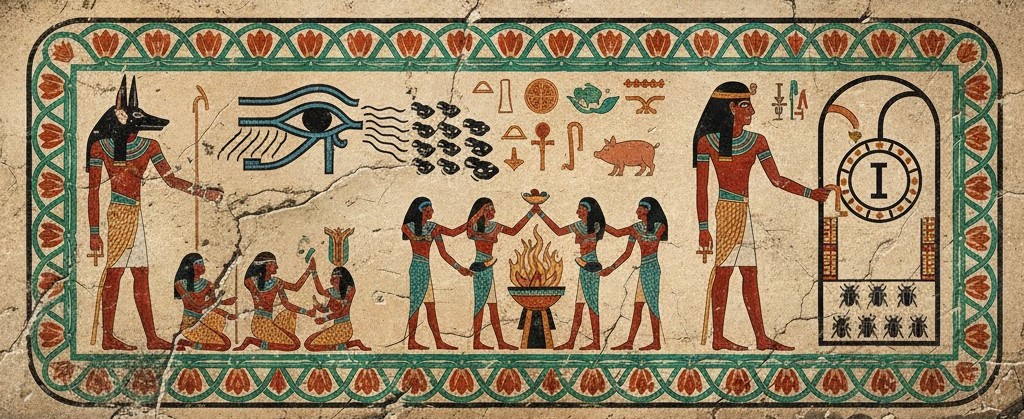
Because the New Year was historically viewed as spiritually unstable, cultures across the world developed protective rituals to control what crossed the threshold into the coming year.
Celtic and Pagan Traditions: Cleansing the Threshold
In Celtic belief systems, the New Year was a time when spirits – both ancestral and unknown – moved freely. Homes were ritually cleansed using smoke from juniper, sage or mugwort to remove lingering spiritual residue from the old year.
Doorways and hearths were protected with iron objects, symbols or charms, as these areas were considered vulnerable entry points. Fires were extinguished and relit after midnight, symbolising renewal and preventing negative energy from carrying over.
These rituals reinforced boundaries during a moment when boundaries were believed to weaken.
Chinese New Year: Controlling Fortune and Repelling Spirits
Chinese New Year is one of the most detailed examples of spiritual protection tied to the turning of the year. Homes are thoroughly cleaned beforehand to remove bad luck and stagnant energy, but cleaning stops once the New Year begins to avoid sweeping away any good fortune.
Red decorations dominate because red is believed to repel malevolent entities, particularly the legendary spirit Nian. Firecrackers and fireworks are used not merely for celebration, but to frighten away wandering spirits and negative influences.
Offerings to ancestors reinforce the belief that ancestral spirits act as guardians during the years transition.
Japanese Traditions: Purification and Balance
In Japan, New Year (Shogatsu) focuses heavily on spiritual purification. Buddhist temples ring bells 108 times at midnight, cleansing human desires and spiritual impurities believed to attract negative influences.
Shinto practices mark sacred spaces with shimenawa ropes, preventing unwanted spirits from entering homes. These traditions reflect the belief that spiritual imbalance increase vulnerability during transitional periods.
European Folklore: Noise, Food and the Dead
Throughout Europe, loud noise was believed to drive away lingering spirits. Church bells, shouting, gunfire and eventually fireworks served as spiritual deterrents.
Food also played a symbolic role. Certain meals were eaten at midnight to influence fate, while in some regions food was left out for visiting spirits of the dead, ensuring they departed peacefully rather than lingering.
From a paranormal perspective, these rituals all serve the same purpose: asserting human intent during a moment of instability.
Is the New Year a Good Time for Paranormal Investigation
The New Year can be a powerful time for paranormal investigation – but it requires awareness, patience and a different approach.
Why the New Year Can Enhance Paranormal Activity
The collective emotional focus on endings and beginnings creates an unusual energetic environment. Investigators often report increased EVP responsiveness, particularly when asking reflective or time-related questions.
Residual entities may become more noticeable as environmental conditions mirror unresolved emotional imprints tied to memory and time.
The symbolic significance of midnight may also act as a trigger point for phenomena, similar to anniversaries or emotionally charged dates in haunted locations.
Allowing for Environmental Interference
However, New Year investigations come with increased interference. Fireworks, parties, traffic, intoxication and heightened ambient noise can easily contaminate audio evidence and trigger false positives.
For this reason, New Year investigations should prioritise:
- Extended baseline readings before midnight
- Careful logging of celebration-related noise
- Passive observation over provocation
- Emotional grounding of investigators
Without these precautions, it becomes difficult to separate genuine phenomena from environmental contamination.
A Reflective Investigative Approach
At Paranormal Down Under, we view the New Year as best suited for passive, reflective investigation rather than aggressive techniques. It is an ideal time for sensitivity work, environmental observation and documenting subtle changes rather than provoking responses.
When approached respectfully, the New Year can offer insight into how emotional energy and time-based symbolism influence paranormal environments.
Final Thoughts: Standing at the Threshold of Time
The New Year has never been just a date change. Across centuries and cultures, it has been treated as a moment of vulnerability, reflection and power – a pause between what was and what will be.
Whether through ancient protection rituals, modern superstition or firsthand paranormal experience, humanity has consistently acknowledged that thresholds matter. We clean our homes, make noise, light fires, set intentions and remember the dead not out of habit, but instinct.
From a paranormal perspective, the New Year acts as a mirror – reflecting our relationship with time, memory and mortality. And in that quiet moment after midnight, when celebrations fade and the world briefly settles, it is easy to feel that something else may be standing there with us, watching the year begin.