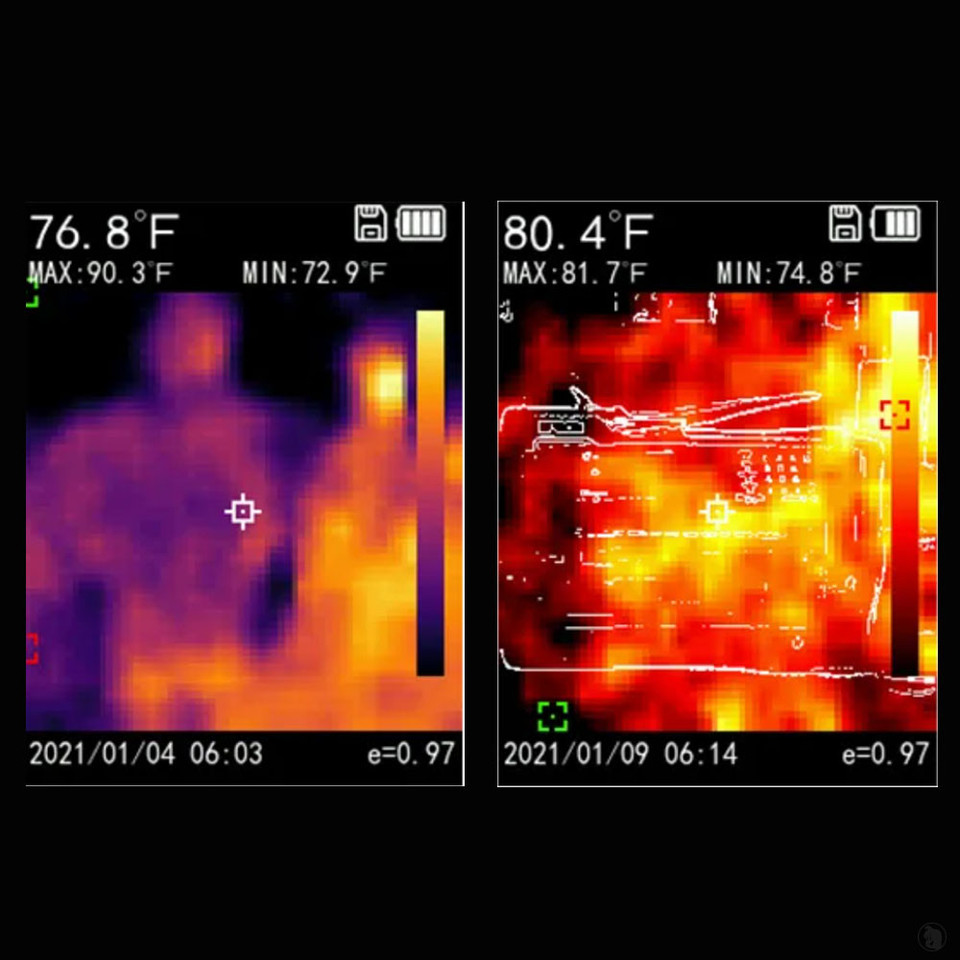
Thermal cameras have steadily become one of the most important pieces of equipment in modern paranormal investigation. Their ability to visualise heat – something our naked eye cannot perceive – allows investigators to detect subtle environmental changes, anomalies and potential manifestations that may otherwise go completely unnoticed.
While EMF meters, EVP recorders and spirit boxes offer audio or energy-based evidence, thermal imaging provides visual documentation, which often becomes the most compelling evidence captured during an investigation.
Today we will be exploring the science, history, paranormal applications, best practices, real-world anomalies and more.
What Exactly Is a Thermal Camera?
A thermal camera, which is also sometimes known as an infrared thermal imaging camera, is a device that converts infrared radiation – heat – into a visual image called a thermogram. Everything above absolute zero emits infrared radiation, even in total darkness, and thermal cameras translate this invisible radiation into a colour-coded temperature image.
Unlike night vision, thermal imaging doesn’t require any external light source. It operates by reading the natural energy emitted from the environment itself.
Core Features of Thermal Cameras
- Works in complete darkness
- Detects heat signatures, not light
- Visualises temperature changes in real time
- Captures stills or video
- Highlights anomalies invisible to human eyes
- Shows heat loss, heat concentration and heat transfer
This makes thermal imaging an extremely useful tool in both scientific and paranormal contexts.
How Thermal Imaging Works (The Actual Science)
Thermal cameras use a sensor called a microbolometer, which measures the energy radiating from surfaces. These sensors consist of thousands of tiny pixels, each recording the temperature of a specific point.
Step-by-Step Breakdown of Thermal Imaging
- Object emits infrared radiation (all objects do).
- The thermal cameras sensor detects this radiation.
- The microbolometer assigns a temperature reading to each pixel.
- The software converts the readings into a coloured or grayscale image.
- The resulting thermogram shows temperature differences clearly.
Thermal Image Colour Interpretation

The camera uses contrasting colours to make temperature shifts visible:
- White, Yellow, Red = warmer
- Green, Blue, Purple, Black = colder
Investigators can choose different colour palettes to highlight details, such as:
- Rainbow
- Ironbow
- Arctic
- Lava
- High-contrast grayscale
Different palettes reveal different features, which assists in debunking or validating anomalies.
Why Temperature Changes Matter in Paranormal Investigation
Temperature shifts have been associated with paranormal experiences for centuries. Early ghost traditions often described rooms “growing cold”, or the air becoming “still and icy”.
Modern paranormal theory suggests a few possible reasons:
1. Energy Absorption Theory
A common belief is that spirits draw energy from the environment in order to manifest, causing cold spots or temperature drops.
This can appear in thermal imaging as:
- A sudden cold patch
- A figure-shaped cold distortion
- Cold “movement” passing through frame
2. Energy Redistribution Theory
In this theory, entities don’t absorb energy – they redistribute it, causing warped thermal patterns. This often shows as swirling cold patches or erratic temperature outlines.
3. Intelligent vs Residual Thermal Behaviour
- Intelligent Hauntings: temperature changes correspond with direct interaction or movement.
- Residual Hauntings: usually no temperature changes – because the “haunting” is an energetic playback, not a conscious entitiy.
Thermal imaging is particularly helpful for distinguishing between these two types of hauntings.
How Thermal Cameras Are Used During Paranormal Investigations
A skilled investigator uses thermal imaging strategically, not just casually pointing the camera around. Below is a detailed look at the best and most effective uses.
1. Sweeping Rooms for Temperature Anomalies
Before conducting any experiment or EVP session, investigators typically run a baseline sweep, recording:
- The average room temperature
- The temperature of all walls, furniture and doorways
- Hotspots (electronics, vents, pipes)
- Expected cold zones (windows, air leaks)
This baseline allows investigators to compare later anomalies to the rooms normal thermal behaviour.
2. Detecting and Tracking Cold Spots
Sudden pockets of cold air – especially those that move – are among the most reported thermal anomalies in hauntings.
A thermal camera can detect:
- Stationery cold spots
- Moving cold distortions
- Cold spots aligning with EMF spikes
- Cold areas forming around investigators
If a cold spot moves independently or maintains a defined shape, it is considered more significant.
3. Capturing Figures or Apparition-Like Shapes
One of the most shocking types of evidence investigators can capture is a human-shaped figure appearing colder or warmer than its environment.
These shapes usually:
- Do not reflect any investigator
- Move independently
- Do not match natural heat signatures
- Sometimes respond to questions or commands
This is where thermal imaging becomes extremely powerful.
4. Monitoring Objects for Paranormal Manipulation
Thermal cameras can show whether:
- A door was recently touched
- An object was held
- Something moved without contact
- A warm handprint appears on a surface
If an object moves without any heat transfer. the event becomes far more interesting.
5. Observing Manifestation Attempts
Some investigators report temperature changes in the lead-up to:
- Shadow figure appearances
- EVPs
- EMF spikes
- Physical movement
Thermal imaging lets investigators document these pre-manifestation fluctuations clearly.
Common Thermal Camera Anomalies in Paranormal Work
Here are some of the most discussed and documented types of thermal anomalies:
1. Human-Shaped Cold Figures
These are among the most compelling captures. They often appear:
- Cooler than everything else
- In full or partial form
- Moving, crouching or “peeking” from behind objects
2. Invisible Heat Sources
This includes:
- Random warm spots with no explanation
- Warm areas forming on walls
- Heat signatures appearing then vanishing
3. Moving Patterns
Entities have been reported to appear as:
- Cold streaks
- Swirling patches
- Heat distortions gliding across rooms
These rarely follow airflow or temperature diffusion patterns, making them harder to debunk.
Real-World Case Examples of Thermal Evidence
The following are examples of things that have been captured using a thermal camera in real-world case studies:
1. Apparition-Like Cold Figure
A full human silhouette captured standing in a doorway – no investigator present, no airflow and no reflective surfaces.
2. Moving Cold Mass
A cold patch travelled from one corner of a room to another while the investigator and their team were remaining still.
3. Heat Handprints Appearing on Objects
Warm handprints appeared on a window where no one had touched.
4. Vanishing Figures
A heat-based figure walked across the frame before it dissipated into nothing.
These examples highlight why thermal imaging is one of the most visually compelling forms of paranormal evidence.
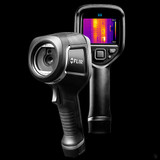
Choosing the Best Thermal Camera for Paranormal Work
Below are features specifically needed for ghost hunting:
- High resolution
- Strong refresh rate
- Wide temperature range
- Video and photo recording
- Colour pallete options
- Low-lag microbolometer
- Good battery life
- Rugged housing
- Ability to export and review footage easily
Cheaper thermal cameras are often not suitable for detailed analysis due to low resolution and poor refresh rates.
Why Every Paranormal Investigator Should Use a Thermal Camera
Thermal imaging:
- Adds visual validation to claims
- Helps debunk environmental explanations
- Supports intelligent haunting classification
- Tracks movement and energy
- Reveals hidden environmental changes
- Documents evidence visually and scientifically
Among all paranormal tools, thermal cameras produce some of the most compelling and convincing evidence – especially when used with strict protocols, cross-verification and proper debunking techniques.

Related Posts:
- https://paranormaldownunder.com/essential-paranormal-equipment-for-beginner-investigators/equipment/
- https://paranormaldownunder.com/evp-recorders-capturing-voices-from-beyond-proven-techniques-for-paranormal-investigations/equipment/
- https://paranormaldownunder.com/trigger-objects-in-paranormal-investigation-how-they-work-and-why-ghost-hunters-use-them/research/
- https://paranormaldownunder.com/how-to-use-ovilus-paranormal-investigation-guide/how-to-guides/
- https://paranormaldownunder.com/pre-investigation-old-willinga-courthouse-police-station/paranormal-investigations/